
“What interests me is how strong can I be?”
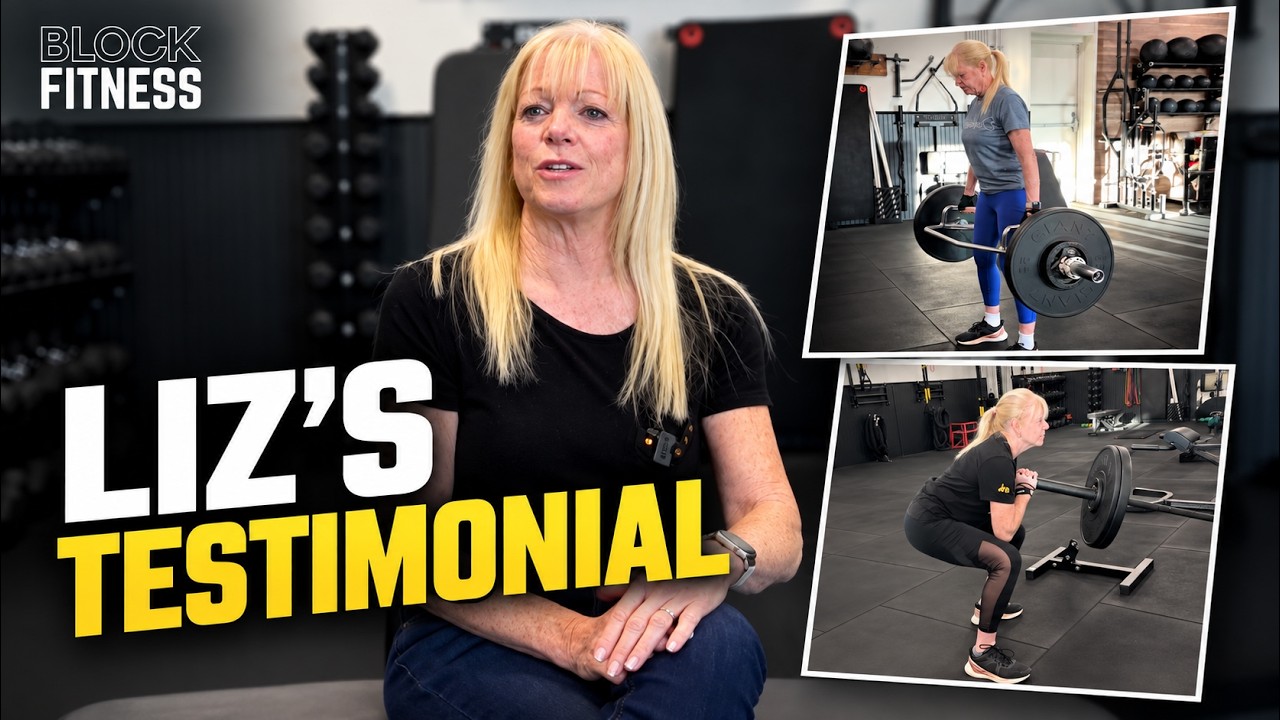
That’s Liz. A torn meniscus sent her to physical therapy. PT helped, and then it ended, the way it always does. That’s when she found Block. Today she hikes the canyon with no knee issues, and she’s training to find out just how strong she can get.
After a torn meniscus, PT ends. Then what?
A torn meniscus is one of the most common knee injuries we see. Physical therapy is a great first step. It gets you moving again and calms things down. Insurance only covers so many visits, though, and when PT wraps up, a lot of people are left on their own with a knee that still doesn’t feel quite right.
“I ended up having a torn meniscus, so a bad knee injury, and then went through physical therapy for a little while, but that ends.”
Liz knew she couldn’t just jump into a crowded gym and keep up with everyone else.
“As you age, you can’t keep up with everyone else. You have to have your own program, and you have to have someone that takes care of you. So that’s what Block was for me.”
That gap between the last PT visit and real strength is where a lot of knee problems come back. Closing it takes a plan built around your knee, progressed over time, with a coach watching how it responds. We’ve seen it with other members coming back from injury too.
What the research says about strength and the meniscus
Strength work matters for knees like Liz’s. In a randomized controlled trial published in the BMJ, 140 middle aged adults with degenerative meniscal tears did either 12 weeks of supervised exercise therapy or arthroscopic surgery. Two years later, knee outcomes were about the same in both groups. The exercise group also gained more thigh strength in the first three months.
Every knee is different, and your doctor or physical therapist should guide decisions about your injury. The takeaway is clear, though. A strong set of legs is some of the best protection a knee can have. It’s also why we look at the whole leg, as we explain in why your hips are often the real problem.
“Oh, try it this way. Is this better?”
Training after a torn meniscus means some movements won’t feel right on some days. What matters is what happens next.
“If you say, ‘Oh, that hurt. That doesn’t feel very good when I do that,’ it’s like, ‘Oh, try it this way. Is this better?’ And that is somebody that’s really, really willing to work with you.”
That’s the job. Adjust the angle, change the exercise, keep the training going. No pushing through pain, and no sitting on the sidelines either.
Liz also likes that there are no mirrors in our gym.
“There’s no mirrors in here, and I love that because you’re not looking at anybody else.”
Your workout is about you, not the person next to you.
No more morning creaks
Liz has a clear picture of the grandparent she wants to be.
“I don’t want to be one of those grandparents that say I can’t do this or I can’t sit on the floor or I can’t pick you up. I want to be able to be physically active.”
The changes showed up in everyday life first.
“I don’t want to get up in the morning and then you hear all the creaking of your bones. I don’t hear that anymore.”
Then out on the trail.
“I can actually hike the canyon and not have a knee issue anymore.”
Training for longevity
Liz has strong opinions about what builds real strength. In her words, water aerobics is “not going to help them build strength.” For her, training is bigger than that.
“It’s about saving your life so you can move forward and do anything that you want to do. I want that longevity.”
That’s exactly how we think about it too. Strength is what lets you keep saying yes. Yes to the hike. Yes to sitting on the floor with the grandkids. Yes to picking them up.
“I just never want to say I can’t. No matter what it is, I just never want to say I can’t.”
Liz’s advice: take the first step
If you’re recovering from a torn meniscus or any other injury, the hardest part is often walking in the door.
“That right foot forward and stepping in and getting out of your shell and realizing that it’s comfortable here. It’s not pretentious. It’s not a scary thing.”
You don’t have to know how strong you can be yet…
…you just have to start finding out.
Did PT end before your knee felt like yours again? Let’s talk: Book here
– Joseph