
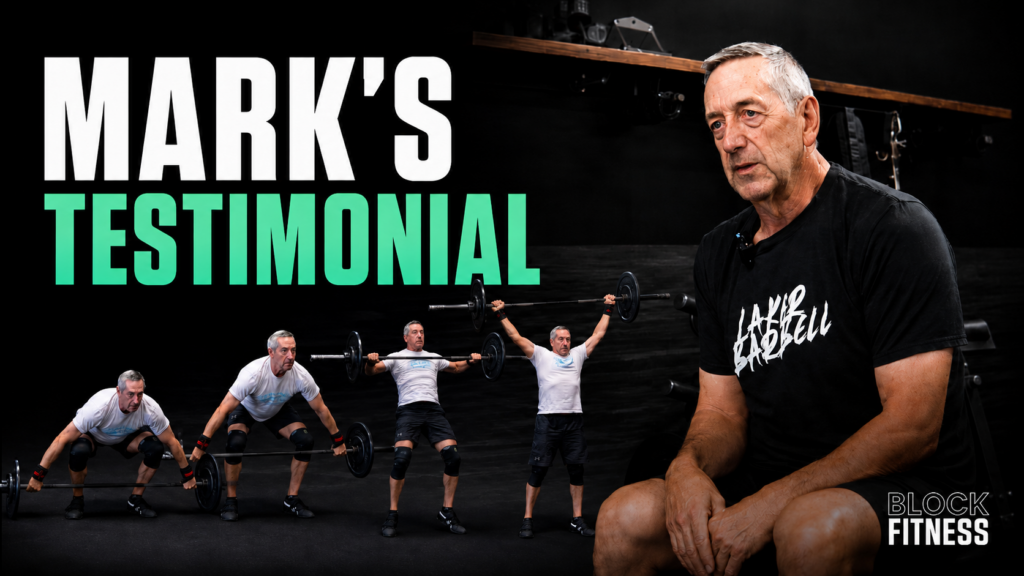
When most people think about strength training after injury, they picture pulling back. Resting. Quietly accepting that their strongest years are behind them.
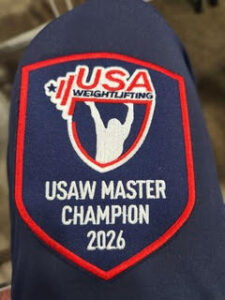
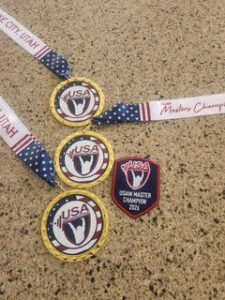
Mark took a different path. Instead of letting a setback stopping him cold, he put in work and found himself on a platform at the USA Weightlifting Masters National Championship.
Watch his story in his own words
It started with a decision
At 53, Mark was sixty pounds heavier than he is today. He had a background in sport, track, cross country, and soccer, but life had drifted the way it does for most of us. Then a chiropractor mentioned a new gym opening in town, and he decided to give it a shot.
He found he loved the barbell work. The lifting suited him, and he held his own for his size and age. For the first time in years, his training had real momentum.
Then the setback
A few games into a new pickleball habit, he ruptured his Achilles tendon. Eight weeks in a chair. A long, slow recovery. And a real fear about returning to the high-impact movements he used to do: the jumping, the running, the rope work.
This is the moment where a lot of fitness stories quietly end. Not because people stop caring, but because they stop seeing a version of training that still fits them.
The pivot that changed everything
Instead of forcing his body back into movements it no longer tolerated, Mark leaned into the ones it did. He shifted his focus to Olympic lifting, the barbell work he already loved, and he built from there.
That single decision, to adapt rather than quit, is the whole thing. Strength training after injury is rarely about pushing through pain. It is about finding the path your body can travel today and progressing it intelligently over time.
He qualified for Masters Nationals in August. He qualified for Worlds in December. Now he competes. And he WON!!!
What his story says about training
We think Mark put it best himself. Whatever you are doing, if you are doing something, it is good. You do not have to be a national competitor for your training to matter. You just have to keep finding the next step that fits.
That is exactly how we coach. We do not hand people a generic program and hope it works around their history. We build training around the person in front of us, injuries and all, so that a setback becomes a pivot instead of a finish line.
If you’re weighing whether strength training after injury is worth the effort, Mark’s results offer a clear answer. His comeback did not happen by accident; it happened because his coaching plan respected his history instead of ignoring it. Every athlete who returns to the gym after a setback brings a different set of limitations, and a good program treats those limitations as information rather than excuses. That is the real lesson behind strength training after injury: the goal is not to recreate the training you did at twenty-five, it is to build the strongest version of the body you have today. Strength training after injury works best when it is built around you, not around a generic template. Mark’s story is proof that age and old injuries do not have to be the end of serious training. They can just be the start of a smarter one.
Ready to find your next step?
If you have been sidelined by an injury, an old fear, or just years of stopping and starting, we would love to show you what intelligent, individualized coaching can do. Book a free assessment and we will map out a plan built around exactly where you are today.
Join Block Fitness Today