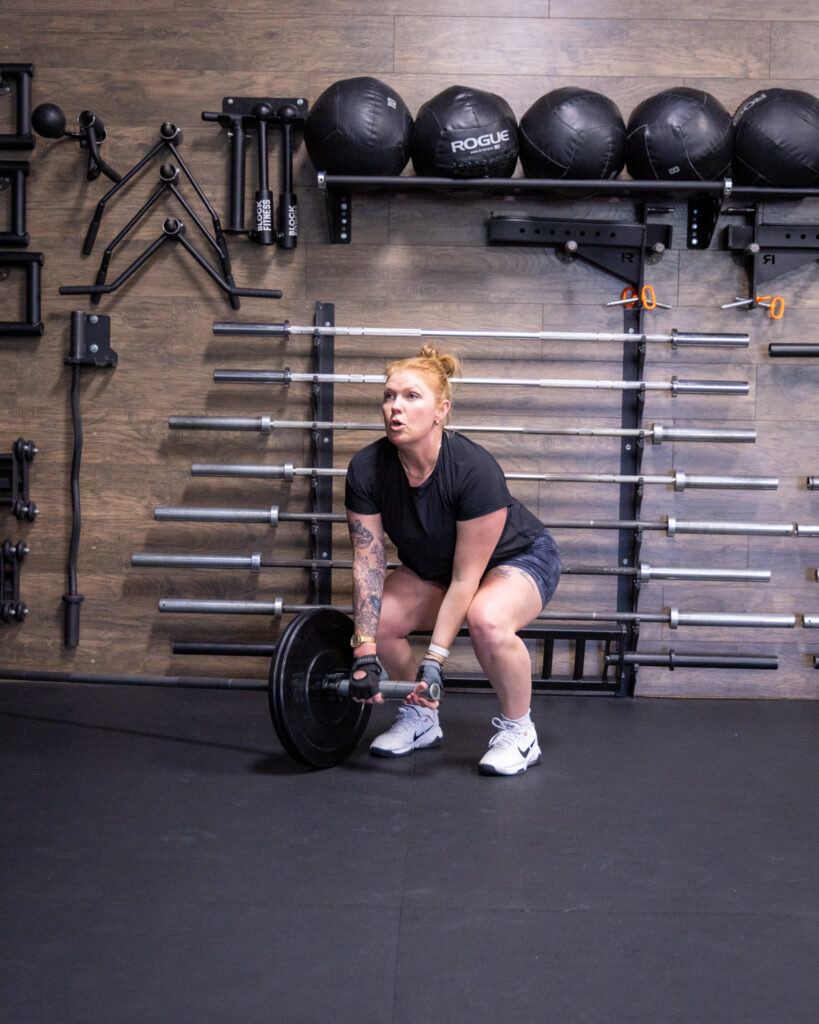
If you are not seeing results from your training, you are almost certainly not alone. Most people who aren’t seeing results are not lazy.
They’re not unmotivated. They’re not lacking discipline. In many cases, they’re working genuinely hard and doing far more than most people around them.
They’re just working hard at the wrong things, or missing one or two variables that quietly determine whether hard work produces results or just produces fatigue.
After years of coaching adults at Block Fitness across Oro Valley and the Catalina Foothills, we’ve seen this pattern more times than we can count. The good news is that the gap between “working hard and going nowhere” and “working hard and actually changing” is almost never as wide as it feels. It usually comes down to one of three things.
The Three Variables That Determine Whether Training Works
1. Your Program Isn’t Actually Progressive
This is the most common culprit, and the one people are least likely to suspect.
Showing up consistently is necessary. It is not sufficient. The body adapts to whatever stress you place on it — and once it adapts, it stops changing. If you’ve been doing the same exercises, at the same weight, for the same number of sets and reps for the last six months, your body figured out how to handle that workload a long time ago. It has no reason to keep adapting.
Progressive overload is the mechanism behind every meaningful strength and body composition change. It means the demand placed on your body increases over time in some measurable way — more weight, more reps, better range of motion, shorter rest, more complex movement pattern. Without it, consistent training produces maintenance at best.
At Block Fitness, every program is built around this principle from day one. Our coaches track what you’re lifting, how you’re moving, and where the next logical progression is. Nothing is left to guesswork. That’s not a luxury — it’s the difference between a program that works and one that keeps you busy.

2. Your Protein Intake Is Lower Than You Think
We covered this in depth in our protein after 50 post, but it’s worth naming here because it is one of the most reliable predictors of whether training produces visible results.
Strength training provides the stimulus for your body to build and preserve muscle. Protein provides the raw material. Without adequate protein — consistently, across multiple meals per day — the training stimulus has nothing to work with. You can train three days a week with perfect programming and still stall out on body composition if your protein intake is chronically low.
The target for active adults over 50 is approximately 0.7 to 1.0 grams per pound of bodyweight daily. Most people, when they actually track for a few days, find they’re landing at roughly half that. Closing that gap alone produces noticeable changes in how the body responds to training — without changing anything else.
3. Your Frequency Isn’t Consistent Enough to Create Adaptation
One good week followed by two inconsistent weeks does not produce adaptation. The body responds to patterns, not isolated efforts.
The research on training frequency is clear: meaningful strength and body composition changes require consistent stimulus over weeks and months, not occasional intense efforts. Three sessions per week, sustained over twelve to sixteen weeks, produces results that two sessions per week for six months often doesn’t — because the signal is strong enough and frequent enough for the body to respond.
This is where most people’s training quietly breaks down. Not in effort during the sessions they attend, but in the consistency of attendance over time. Life intervenes. A week gets missed. Then another. The momentum built over the previous month starts to erode, and the next session feels like starting over.

We’ve watched hundreds of Block Fitness members solve this problem not through more motivation but through structure. A scheduled session at a set time, with coaches who know your name and expect to see you, changes the accountability equation entirely. The session is on the calendar. Skipping it has a social cost. That structure is worth more than most people expect.
What This Looks Like in Practice
The three variables above are not independent. They reinforce each other.
A program that progresses consistently gives your body a reason to adapt. Adequate protein gives it the material to do so. Consistent frequency gives it the repeated signal it needs to make that adaptation permanent.
When all three are in place at the same time, results that felt out of reach become predictable. We see this at Block Fitness regularly. Members who have been stuck for months — doing things on their own, working hard, feeling frustrated — come in, get their program dialed in, clean up their protein, and show up consistently. Within eight to twelve weeks, the change is noticeable. Within six months, it’s significant.
The work was never the issue. The variables were.
The Honest Assessment: Why You Are Not Seeing Results
If you’ve been training consistently and not seeing the results you expected, the answer is almost certainly not to work harder. It’s to audit these three variables honestly.
Is your program actually getting harder over time, or are you doing the same thing you were doing six months ago?
Are you hitting your protein targets at every meal, or are you mostly getting there at dinner?
Are you training three times per week every week, or is your schedule more like twice per week some weeks and zero per week others?
Most people who answer those three questions honestly find the gap immediately.
At Block Fitness, we’ve been helping adults in Tucson close exactly that gap for years. The coaching model we’ve built — individualized programming, consistent progression, coaches who track your work and know when to push — exists specifically to solve this problem.
If you’re ready to stop guessing and start seeing the results your effort deserves, we’d love to talk.
Schedule your first session here — at either our Oro Valley or Catalina Foothills location.
Move Better. Feel Better. Live Stronger.
Quick Take: FAQ
Q: How long does it take to start seeing results when everything is dialed in?
A: Most people notice meaningful changes in strength and how they feel within six to eight weeks of consistent training with adequate protein. Visible body composition changes typically follow at the ten to sixteen week mark with sustained consistency.
Q: What if I’ve been training for years and still feel stuck?
A: Long-term trainees often stall because progression has become too incremental or the program hasn’t changed in too long. A fresh set of eyes on your programming and a protein audit almost always reveals the gap. This is one of the most common conversations we have with experienced clients at Block Fitness.
Q: Is three days per week really enough?
A: For most adults over 40 balancing work, family, and recovery demands, three well-designed sessions per week is not just enough — it’s often optimal. More is not automatically better. Consistent is better.
References
- Schoenfeld BJ. Science and Development of Muscle Hypertrophy. Human Kinetics. 2016.
- Ralston GW, et al. “The effect of weekly set volume on strength gain: a meta-analysis.” Sports Medicine. 2017.
- Morton RW, et al. “A systematic review, meta-analysis and meta-regression of the effect of protein supplementation on resistance training-induced gains in muscle mass and strength.” British Journal of Sports Medicine. 2018.
- American College of Sports Medicine. “Position Stand: Progression Models in Resistance Training for Healthy Adults.” Medicine & Science in Sports & Exercise. 2009.