
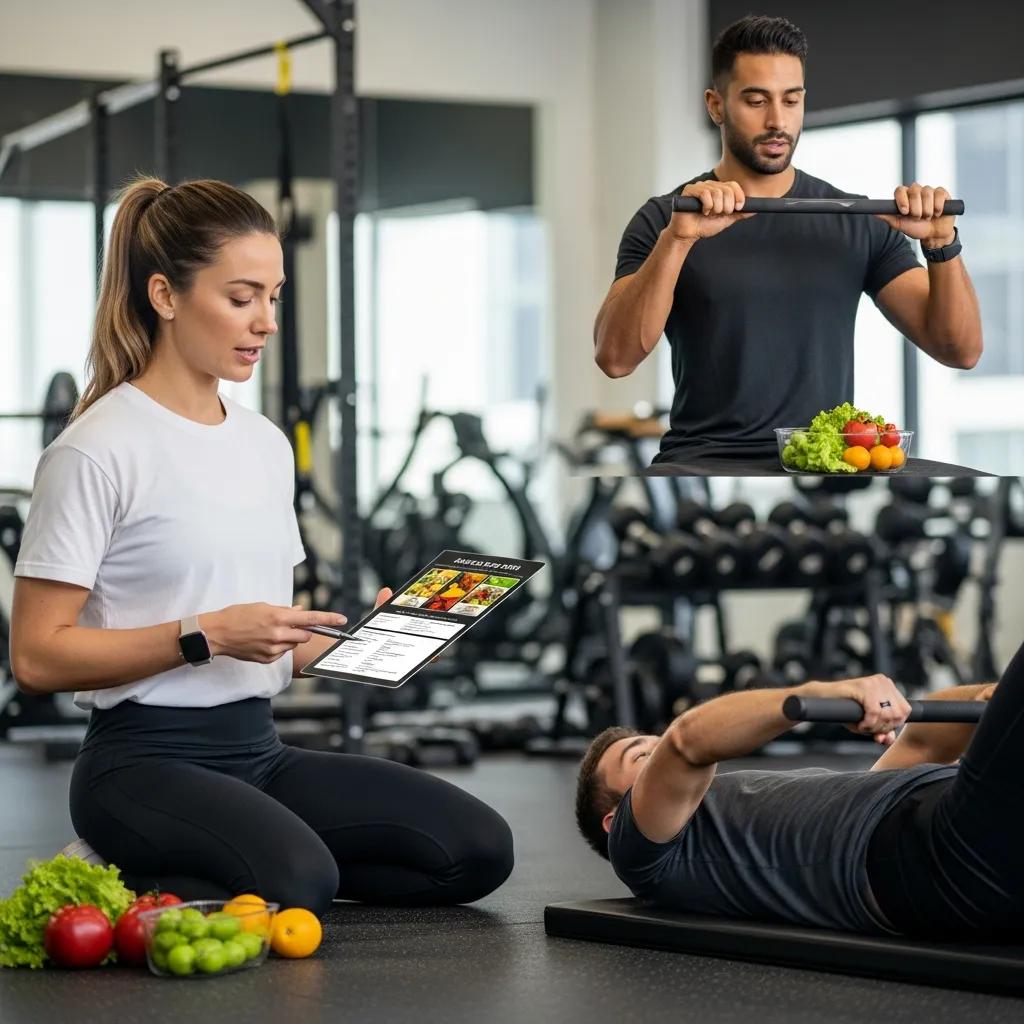
Integrated nutrition coaching and personal training is a coordinated approach that aligns diet, exercise, and behavior-change strategies to deliver measurable, sustainable progress toward health and performance goals. This article explains how combining personalized nutrition coaching and targeted training accelerates fat loss, preserves or builds lean mass, improves recovery, and supports long-term habit change through assessment, planning, and accountability.
Many readers struggle with inconsistent results because programs treat food and exercise as separate problems; integrated coaching addresses both the metabolic environment and the mechanical stimulus so adaptations compound. You will learn the physiological mechanisms that drive synergy between nutrition and training, what tailored plans include, practical onboarding steps, and how to evaluate coaching qualifications to choose the right provider.
The sections that follow cover benefits and mechanisms, the anatomy of personalized meal and workout plans, realistic program expectations and habit-based accountability, and a checklist for picking a certified coach who matches your goals. Throughout, keywords like nutrition coaching and personal training, personalized nutrition and fitness plans, and habit transformation nutrition and training are used to map actionable guidance to real-world progress.
What Are the Benefits of Combining Nutrition Coaching and Personal Training?
Integrated nutrition coaching and personal training pairs metabolic regulation with mechanical stimulus to create faster, safer, and more sustainable results. This synergy improves energy balance, optimizes muscle protein synthesis, and reduces injury risk by aligning fuel, recovery, and exercise selection. The integrated approach also supports behavior change by combining education, measurable targets, and regular accountability that promote adherence and maintenance.
Understanding these benefits clarifies why combined plans often outperform isolated nutrition coaching or training programs.
This comparison shows how combined interventions translate to practical outcomes for common goals.
| Goal | Mechanism | Outcome |
|---|---|---|
| Weight loss | Caloric management + resistance training | Faster fat loss with lean mass retention |
| Muscle gain | Targeted protein + progressive overload | Greater hypertrophy and strength increases |
| Performance | Periodized fueling + sport-specific training | Improved endurance, power, and recovery |
This table highlights that aligning diet and training changes the causal pathway from short-term results to lasting adaptation, demonstrating why an integrated plan matters.
How Does Integrated Fitness and Nutrition Enhance Weight Loss and Muscle Gain?

Integrated fitness and nutrition coaching enhances fat loss and muscle gain by creating the metabolic conditions for change while providing the stimulus that forces the body to adapt. Nutrition establishes a caloric and macronutrient framework that supports a slight energy deficit or surplus as appropriate, while resistance training triggers muscle protein synthesis and neuromuscular adaptations that preserve or build lean tissue.
Timing protein around workouts and prioritizing recovery nutrition improve net protein balance, which leads to better body composition outcomes than nutrition coaching or exercise alone. In practice, a client who reduces daily calories modestly while following a progressive strength plan typically keeps more muscle and loses more fat than someone who only diets.
Why Is a Holistic Approach Key to Sustainable Health and Fitness?
A holistic approach is essential because long-term success depends on behavior, recovery, and context, not short-term fixes. Habit formation strategies—small wins, consistent routines, and environment shaping—reduce decision fatigue and make healthy choices automatic, supporting adherence beyond initial motivation. Including sleep, stress management, and mobility work prevents setbacks from overtraining, injury, or burnout and sustains progress. When nutrition, training, and lifestyle factors are coordinated, clients experience steady progress and resilience, which encourages continued engagement and improved outcomes.
How Do Personalized Nutrition and Fitness Plans Unlock Your Full Potential?
Personalized nutrition and fitness plans begin with assessment and tie each plan component to measurable outcomes to increase efficiency and adherence. Assessment informs calorie and macronutrient targets, exercise prescriptions, and progression models so that plans fit an individual’s physiology, schedule, and preferences. Iterative tracking and data-driven adjustments keep progress on course by revealing when macronutrients, volume, or recovery need refinement. Personalization reduces wasted effort and accelerates adaptation by focusing resources where they have the greatest impact.
A compact mapping shows how plan components produce specific benefits.
| Plan Component | Attribute | Result |
|---|---|---|
| Tailored meal plan | Calorie and macronutrient targets | Improved energy, recovery, and body composition |
| Workout programming | Exercise selection and progression | Strength gains and hypertrophy with reduced injury risk |
| Progress tracking | Body comp and performance metrics | Faster adjustments and sustained progress |
This mapping illustrates that each element of a tailored program has a clear role and measurable outcome, ensuring the plan delivers value efficiently.
What Components Make Up a Tailored Meal and Workout Plan?

A tailored meal and workout plan starts with intake and movement assessments and translates findings into practical prescriptions that fit daily life. Key components include a calorie target, macronutrient distribution, meal timing, exercise selection, set/rep schemes, and recovery protocols that match fitness level and goals. The plan also includes measurable benchmarks—body composition, strength lifts, and aerobic markers—to guide adjustments. When these pieces are aligned, nutrition supports training adaptation and training creates demand that nutrition satisfies, producing consistent improvements.
Sculptify: Personalized Meal and Exercise Planning for Holistic Health Management
This article introduces Sculptify, an innovative web application that streamlines the integration of healthy habits into daily life. With tailored training programs and meal plans, it caters to a diverse user base ranging from beginners to fitness enthusiasts with existing routines. Users can choose from predefined options, seek professional advice, or customize their plans. Focused on simplifying the complex landscape of personal wellness, Sculptify eliminates confusion and contradiction, providing a comprehensive and accessible platform for sustainable lifestyle changes. The app equips users with the knowledge and tools necessary for a permanent shift in their approach to health. Additionally, Sculptify serves as a client-management platform for nutritionists and trainers, facilitating a seamless connection between professionals and their clients.
Sculptify–A Comprehensive Meal and Exercise Planning Application for Personalized Health Management, 2024
How Does Expert Guidance from Certified Coaches Improve Results?
Certified coaches bring applied knowledge that converts science into personalized action, offering technique correction, load management, and nutrition adjustments that reduce plateaus and injury risk. Coaches interpret progress metrics and tweak variables—like protein distribution or training frequency—to maintain momentum and responsiveness. Their accountability systems (scheduled check-ins, habit coaching, and objective tracking) help clients sustain adherence during obstacles. In short, expert oversight accelerates safe progress and helps clients translate intentions into measurable outcomes.
What Should You Expect from an Integrated Nutrition Coaching and Personal Training Program?
Expect a structured onboarding sequence that gathers health history, movement screening, and dietary intake to create a cohesive plan with clear milestones. Typical workflow includes initial assessment, custom plan creation, scheduled training sessions or workouts, nutrition coaching touchpoints, and regular progress reviews every 2–6 weeks to refine targets. Timelines vary by goal—noticeable changes in strength and energy are often seen in 4–8 weeks, with body composition shifts appearing across 8–16 weeks when adherence is steady. Clear communication and measurable checkpoints reduce uncertainty and keep clients focused on incremental gains.
- Initial assessment: Collect health history, movement, and diet data to identify constraints and priorities.
- Custom plan: Build a nutrition and training program aligned to goals and lifestyle.
- Ongoing coaching: Use check-ins, tracking, and progressive adjustments to sustain progress.
These steps summarize how structured programs move clients from assessment to outcomes while enabling continuous improvement.
For those exploring integrated programs, a common model is combined assessment → custom plan → coaching and tracking with flexible pricing models based on frequency and support level. Consider booking a consult to review assessment options and program formats that match your schedule and goals.
How Are Individual Assessments Used to Create Custom Plans?
Individual assessments provide the data that pins plan variables to real needs, not guesswork, by revealing medical constraints, movement limitations, and baseline performance. Health screens identify contraindications and guide safety modifications, while movement and strength tests determine exercise selection and progression rates. Dietary intake analysis uncovers caloric patterns and nutrient gaps that shape macro targets and meal timing. Translating assessment results into plan features ensures prescriptions address root causes and align with personal capacity.
What Role Does Accountability and Habit Transformation Play in Progress?
Accountability and habit transformation convert intention into sustained action by creating small, repeatable behaviors that compound over time. Common accountability tools include weekly check-ins, progress photos or metrics, and app-based logging that provide objective feedback and timely course correction. Habit strategies—cue, routine, reward and incremental habit stacking—make adherence easier and more automatic, reducing reliance on motivation alone. When accountability and habit design are built into coaching, clients demonstrate higher completion rates and longer-term maintenance.
How Can You Choose the Right Nutrition and Personal Training Coach for Your Goals?
Choosing the right coach involves matching credentials, scope of practice, and experience to your specific goals and health needs. Look for recognized certifications for training and nutrition—such as NASM for personal training—and understand the difference between a certified personal trainer, a nutrition coach, and a registered dietitian in scope and legal practice. Evaluate experience with your target population, communication style, and the provider’s approach to progress measurement and habit change. A systematic selection process reduces mismatch and speeds results by aligning coaching methods to client needs.
| Credential | Scope | What to Expect |
|---|---|---|
| NASM (certification) | Personal training curriculum and corrective exercise focus | Program design, movement assessment, and progressive overload |
| Nutrition coach certification | Habit-based nutrition guidance | Macro targets, meal planning, and behavior coaching |
| Registered dietitian | Clinical nutrition and medical nutrition therapy | Medical-level dietary interventions and disease management |
This comparison clarifies how different credentials indicate scope and typical client needs they address, helping you ask targeted questions during consultations.
What Certifications and Experience Should Your Coach Have?
Prioritize certifications that match intended services and ask about hands-on experience with clients who have similar goals or conditions. A certified personal trainer with additional nutrition coaching credentials can design training and general meal plans, while a registered dietitian handles clinical nutrition issues and medical conditions. Ask coaches for sample program structures, progression models, and measurement frameworks to evaluate whether their approach fits your needs. Understanding the intersection of certification and nutrition coaching and experience clarifies what to expect from coaching sessions.
How Do Client Success Stories Reflect Coaching Effectiveness?
Client stories are most useful when they include measurable outcomes, timelines, and clear descriptions of the coach’s role in behavior change. Prefer testimonials that cite specific metrics—weight or body-fat changes, strength improvements, or performance gains—and describe the strategies used, like habit stacking or progressive overload. During consultations, request case examples that align with your goals and ask which interventions drove the results. This scrutiny helps distinguish between short-term fixes and coaches who foster durable change.
For readers ready to act, schedule an assessment with a certified coach or nutrition professional to review your goals, undergo baseline testing, and receive a tailored plan and accountability structure that fit your lifestyle. This next step turns the information here into a practical pathway toward measurable progress.
Frequently Asked Questions
What is the difference between a nutrition coach and a registered dietitian?
A nutrition coach typically focuses on habit-based nutrition guidance, helping clients with meal planning and behavior change strategies. In contrast, a registered dietitian (RD) is a licensed professional who provides clinical nutrition advice and medical nutrition therapy. RDs can address specific health conditions and dietary needs, making them suitable for clients requiring specialized dietary interventions. When choosing between the two, consider your health goals and whether you need general guidance or clinical support.
How often should I expect to meet with my coach?
The frequency of meetings with your coach can vary based on your goals and the program structure. Typically, clients may meet weekly or bi-weekly for check-ins, progress assessments, and adjustments to their plans. Some programs may also include additional touchpoints for nutrition coaching or accountability. Regular meetings help maintain motivation, ensure adherence to the plan, and allow for timely adjustments based on progress and feedback.
Can I follow an integrated program if I have dietary restrictions?
Yes, nutrition coaching and personal training can be tailored to accommodate dietary restrictions. Coaches will assess your specific needs and preferences during the initial evaluation, allowing them to create a personalized plan that aligns with your health goals while respecting any allergies, intolerances, or lifestyle choices. This flexibility ensures that you can achieve your fitness and nutrition objectives without compromising your dietary requirements.
What role does technology play in integrated coaching programs?
Technology enhances integrated coaching programs by providing tools for tracking progress, logging meals, and scheduling workouts. Many coaches use apps or online platforms to facilitate communication, share resources, and monitor client adherence. These tools can also offer data analytics to help coaches make informed adjustments to your plan. By leveraging technology, clients can receive real-time feedback and support, making the coaching experience more interactive and effective.
How long does it take to see results from an integrated program?
Results from an integrated nutrition coaching and personal training program can vary based on individual factors such as adherence, starting point, and specific goals. Generally, clients may notice improvements in strength and energy levels within 4 to 8 weeks, while significant changes in body composition may take 8 to 16 weeks. Consistent effort and commitment to the program are crucial for achieving sustainable results over time.
What should I do if I hit a plateau in my progress?
Hitting a plateau is common in fitness and nutrition journeys. If you experience one, communicate with your coach to reassess your plan. They can analyze your progress metrics, adjust your calorie intake, modify your workout routine, or implement new strategies to reignite progress. Additionally, focusing on habit transformation and accountability can help you stay motivated and committed, making it easier to push through challenging periods.
Conclusion
Integrating nutrition coaching with personal training offers a comprehensive strategy that enhances fat loss, muscle gain, and overall health by addressing both dietary and exercise needs. This holistic approach not only fosters sustainable habit change but also ensures that clients receive tailored support that aligns with their unique goals. By choosing a certified coach, you can embark on a personalized journey that maximizes your potential and leads to measurable results. Take the first step towards transforming your health by scheduling an assessment with a qualified professional today.