
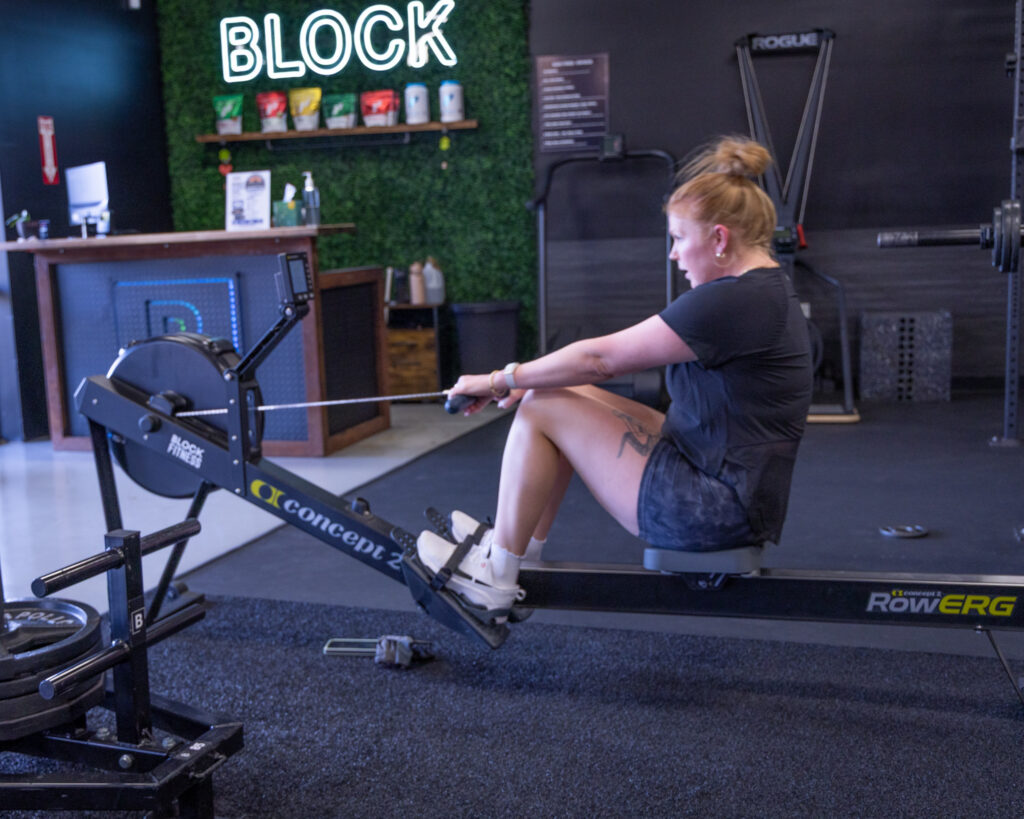
If you have relied on cardio after 50 and noticed the results drying up, you are not alone. For decades, the standard advice for adults who wanted to lose weight, get healthier, and feel better was some version of the same thing.
Do more cardio. For many people, cardio after 50 became the entire plan.
Walk more. Run more. Bike more. Get your heart rate up. Burn calories. The formula seemed simple and the logic seemed sound — cardio burns energy, burning energy creates a deficit, a deficit produces weight loss.
And for a while, especially earlier in life, it worked well enough.
Then something changed. The cardio kept happening. The results stopped coming. The weight became harder to lose and easier to regain. Energy didn’t improve the way it used to. The body felt like it was working against the effort instead of responding to it.
If this sounds familiar, you are not imagining it. And it is not a motivation problem.
After 50, the body’s relationship with cardio changes in ways that most people are never told about. Understanding those changes — and what to do instead — is one of the most practically valuable things an adult in this stage of life can do for their long-term health.
What Cardio Does Well
Let’s be direct about something first: cardio is not the enemy. It is not something to eliminate or avoid. Cardiovascular training produces real, meaningful health benefits that no other form of exercise fully replaces.
Regular aerobic exercise strengthens the heart muscle, improves blood pressure and cholesterol profiles, supports cognitive function, reduces anxiety, and extends cardiovascular healthspan. The research on these outcomes is substantial and consistent. The American Heart Association recommends 150 minutes of moderate aerobic activity per week for good reason.
Cardio belongs in a healthy adult’s life. The question is not whether to do it. The question is whether it should be the primary tool — and for adults over 50 whose goals include maintaining body composition, preserving muscle, and building lasting physical capacity, the answer is clearly no.
What Changes After 50 That Makes Cardio Alone Insufficient
Muscle Mass Begins Declining Faster
After 50, the age-related loss of muscle mass — sarcopenia — accelerates without specific intervention. Adults who do not engage in resistance training lose an estimated three to five percent of muscle mass per decade after 30, with the rate increasing after 50.
Cardio does not prevent this. In fact, high volumes of cardio without adequate strength training and protein intake can accelerate muscle loss — because the body, under sustained aerobic demand without a resistance training signal, will break down muscle tissue for fuel.
Less muscle means a slower metabolism. A slower metabolism means the caloric math of cardio produces smaller and smaller deficits over time. This is why the adult who ran five days a week at 40 finds the same running schedule producing diminishing results at 55. The metabolic foundation has shifted underneath the effort.
The Caloric Burn of Cardio Is Smaller Than Most People Think
The body is remarkably efficient at adapting to sustained aerobic exercise. A 2021 study published in Current Biology found that the human body compensates for increased aerobic activity by reducing energy expenditure in other areas — a phenomenon researchers call metabolic adaptation. The net caloric burn of a cardio session, after accounting for this compensation, is often significantly lower than the number on the treadmill screen suggests.
This is not a flaw in the research. It is how human physiology works. The body protects its energy stores. The more cardio you do, the better your body gets at doing it efficiently — which is good for endurance but not for caloric deficit.
Strength training does not trigger the same compensation to the same degree. The metabolic cost of building and maintaining muscle tissue is ongoing — muscle burns calories at rest in a way that cardiovascular adaptation does not sustain over time.
Cardio Does Not Build the Physical Qualities That Matter Most After 50
As we’ve covered in previous posts, the physical qualities most critical to health, function, and independence after 50 are muscle mass, bone density, joint stability, and the power to catch yourself in a fall.
Cardio does not build these. It does not stimulate muscle protein synthesis. It does not load bone in the ways that drive remodeling. It does not develop the posterior chain strength that protects the spine and knees. It does not train the rate of force development that catches you on a misstep.
These qualities require resistance training. Cardio, however consistent and however well-intentioned, cannot substitute for it.
The Right Relationship Between Strength and Cardio After 50
Here’s the framework we use at Block Fitness, and the one supported most consistently by the research.
Strength training is the foundation.
Three sessions per week of progressive resistance training builds and preserves muscle, loads bone, develops joint stability, and maintains the metabolic activity that makes everything else work. This is non-negotiable for adults over 50 who want to maintain their physical capacity over the long term.
Cardio is the complement.
Two to three sessions per week of moderate cardiovascular activity — walking, cycling, swimming, hiking — supports heart health, aids recovery, contributes to caloric balance, and provides the aerobic benefits that strength training alone does not fully replicate.
Together, they produce outcomes that neither produces alone. The strength training preserves the muscle that keeps the metabolism active. The cardio supports the cardiovascular system and aids recovery between strength sessions. Each makes the other more effective.
The mistake most adults make is treating these as equivalent options — choosing one or the other based on preference or habit — rather than understanding that they serve distinct physiological roles and are most powerful in combination.
What This Actually Looks Like
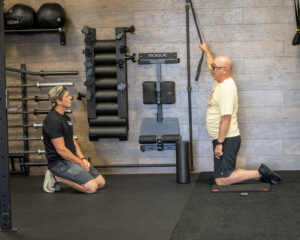
A well-designed week for an adult over 50 at Block Fitness typically looks something like this.
Monday, Wednesday, Friday: strength training. Three sessions of 45 to 60 minutes built around the fundamental movement patterns — squat, hinge, push, pull, carry. Progressive loading over time. Adequate protein surrounding the sessions.
Tuesday, Thursday, and/or the weekend: moderate cardio. A 30 to 45 minute walk, a bike ride, a swim. Something that elevates the heart rate without competing with recovery from the strength sessions.
That schedule is not extreme. It is not time-prohibitive for most adults. And it produces results that cardio alone or strength training alone consistently fails to match — because it addresses the full picture of what an aging body needs to thrive.
The Conversation Worth Having
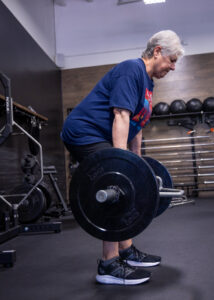
If you’ve been doing cardio faithfully for years and feel like the results have stalled, this is not a reflection of your effort. It is a reflection of physiology. The tool you’ve been relying on is real and valuable — it just wasn’t designed to do the job you’ve been asking it to do alone.
Adding progressive strength training to a consistent cardio base is one of the highest-leverage changes an adult over 50 can make to their health trajectory. We’ve watched it change outcomes for members across Oro Valley and the Catalina Foothills more times than we can count.
If you want to understand what that combination looks like for your specific situation, goals, and history — that’s exactly the conversation we start with at Block Fitness.
Schedule a session at our Oro Valley or Catalina Foothills location and let’s build the full picture.
Move Better. Feel Better. Live Stronger.
Quick Take: FAQ
Q: Will I lose weight faster if I add cardio on top of strength training?
A: Possibly, but the more important question is what kind of weight you lose. Cardio without strength training risks losing muscle alongside fat. Strength training with cardio preserves muscle while supporting fat loss — producing better body composition outcomes even if the scale moves at a similar pace.
Q: How much cardio is too much if I’m also strength training?
A: The main risk of excessive cardio alongside strength training is interfering with recovery between strength sessions. For most adults over 50 training three days per week, two to three moderate cardio sessions of 30 to 45 minutes are well-tolerated. Very high cardio volumes — daily long sessions — can compromise strength adaptation and accelerate muscle loss without adequate protein.
Q: I’ve always been a runner. Do I have to give that up?
A: Not at all. Running is valuable cardio with real health benefits. The recommendation is to add strength training alongside it — not to replace running with lifting. The combination of running and progressive strength training produces better long-term outcomes than either alone for adults over 50.
References
- Pontzer H, et al. “Constrained total energy expenditure and metabolic adaptation to physical activity in adult humans.” Current Biology. 2016.
- Liu CJ, Latham NK. “Progressive resistance strength training for improving physical function in older adults.” Cochrane Database of Systematic Reviews. 2009.
- Westcott WL. “Resistance training is medicine: effects of strength training on health.” Current Sports Medicine Reports. 2012.
- American Heart Association. “American Heart Association Recommendations for Physical Activity in Adults.” heart.org
- Cadore EL, Pinto RS, Bottaro M, Izquierdo M. “Strength and endurance training prescription in healthy and frail elderly.” Aging and Disease. 2014.