
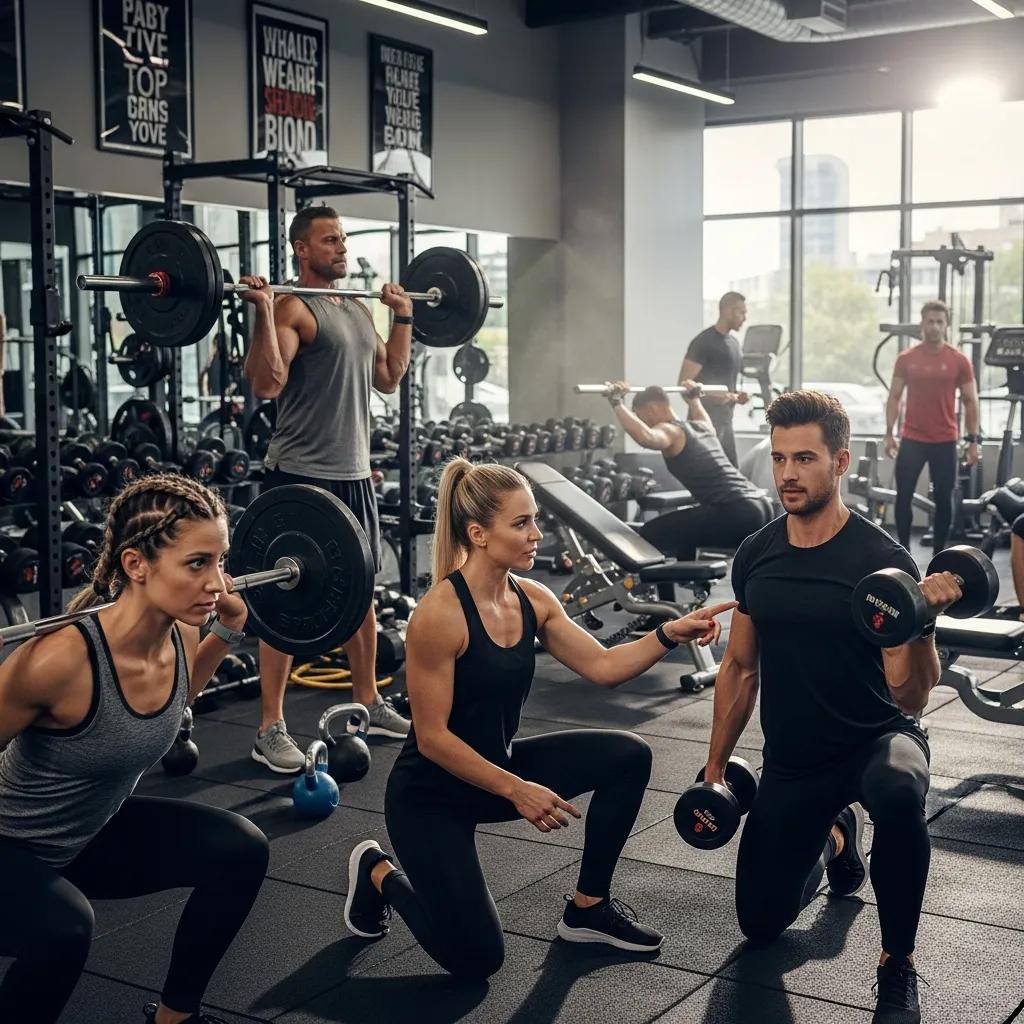
Can you build muscle after 30? If you’ve been asking yourself this question — especially after noticing that your body seems to respond differently to exercise than it did in your 20s — you’re not alone. At Block Fitness in Tucson, we hear this question constantly from adults in their 30s, 40s, 50s, and beyond. And the answer is unequivocally yes. You can absolutely build muscle after 30, after 40, after 50, and even into your 60s and 70s. What changes is the strategy — not the possibility.
This post breaks down the science of muscle growth after 30, explains what actually changes as you age, and gives you a clear framework for building strength and muscle well into your later decades. Whether you’re in Tucson, Oro Valley, or the Catalina Foothills — and whether you’re brand new to lifting or returning after a long break — this information applies to you.
The Science of Muscle Growth: What Changes After 30
Starting around age 30, adults begin to experience a gradual decline in muscle mass called sarcopenia. Without deliberate resistance training, most adults lose 3–8% of muscle mass per decade — and that rate accelerates after age 60. The National Institute on Aging identifies sarcopenia as one of the primary contributors to functional decline and reduced quality of life in aging adults.
But here’s the critical point: sarcopenia is largely preventable — and largely reversible — with consistent resistance training. Your muscle cells retain the ability to respond to training stimulus throughout your entire life. What changes after 30 is not your body’s capacity to build muscle. What changes is the efficiency of the process and the recovery demands involved.
Specifically, after 30 you may notice:
-
Slightly slower muscle protein synthesis response to training
-
Longer recovery time between sessions
-
Greater impact of sleep quality and nutrition on results
-
Reduced tolerance for high-volume, high-frequency training
None of these changes prevent muscle growth. They simply require a smarter, more intentional approach.
Can You Build Muscle After 30 at the Same Rate as in Your 20s?
Probably not at the same rate — but that’s not the right comparison to make. In your 20s, your hormonal environment (particularly testosterone and growth hormone) was at or near peak levels. After 30, these hormones begin a gradual natural decline. For men, testosterone decreases roughly 1–2% per year starting in their 30s. For women, hormonal fluctuations throughout the 40s and into menopause affect muscle retention and body composition.
However, research consistently shows that adults well into their 70s and 80s make meaningful muscle and strength gains in response to resistance training. A landmark study in The Journal of Gerontology demonstrated significant muscle hypertrophy in adults aged 65–80 following a 12-week strength program. The takeaway: the rate may be different, but the results are absolutely real.
And in many practical ways, adults over 30 have significant advantages over younger lifters:
-
Greater patience and discipline
-
Better ability to follow structured programs consistently
-
More motivation from real-world benefits (energy, function, health) rather than aesthetics alone
-
Greater appreciation for long-term sustainability over short-term results
The Key Principles for Building Muscle After 30
The fundamentals of muscle growth don’t change with age. Progressive overload, adequate protein, consistent training, and smart recovery still drive results. What changes is the emphasis and the specifics of how you apply each principle.
1. Progressive Overload — Done Carefully
Progressive overload — gradually increasing the demand on your muscles over time — is the single most important driver of muscle growth at any age. After 30, the key is to progress in multiple ways, not just by adding weight. Explore our strength training over 40 guide for examples of how to progress smartly. You can also increase reps, decrease rest periods, improve form, or increase time under tension — all of which drive adaptation without necessarily loading the joints more heavily.
2. Protein Intake — More Than You Think
Muscle protein synthesis becomes slightly less efficient after 30, which means your body may need more protein per pound of bodyweight to achieve the same anabolic response. Research suggests adults over 40 benefit from 0.7–1.0 grams of protein per pound of bodyweight daily — significantly higher than traditional recommendations. Spreading protein intake across 3–4 meals (rather than consuming it all at once) also improves muscle protein synthesis throughout the day.
3. Recovery — Non-Negotiable
After 30, recovery becomes the limiting factor for most adults. You can train hard and eat well, but if you’re sleeping 5–6 hours per night and managing high chronic stress, your body simply won’t build muscle effectively. The CDC recommends 7–9 hours of sleep for adults — and for people actively training to build muscle, closer to 8–9 hours produces dramatically better results.
4. Smart Programming — Not More Volume
More is not better after 30. Three to four well-structured sessions per week typically produces better results than six poorly recovered sessions. Each session should include compound movements that engage multiple muscle groups — squats, deadlifts, presses, rows, hinges — which create the greatest anabolic stimulus per unit of time spent. Our semi-private training program at Block Fitness is built around exactly this approach: focused, purposeful sessions that produce measurable results without breaking your body down.
5. Consistency Over Perfection
The adults who build the most muscle after 30 are not the ones who train the hardest in any given week. They’re the ones who show up consistently for months and years. Sustainable training beats heroic training every time. Missing occasional workouts matters far less than maintaining a consistent rhythm over the long haul.
What Happens If You Don’t Train?
The consequences of not maintaining muscle mass after 30 extend well beyond aesthetics. Muscle loss is directly linked to metabolic decline, increased cardiovascular risk, reduced bone density, higher injury risk, and decreased functional independence as you age. The CDC’s physical activity guidelines recommend strength training at least twice weekly for all adults specifically because of these compounding health risks.
At Block Fitness in Tucson — serving Oro Valley and the Catalina Foothills — we’ve worked with adults who haven’t lifted consistently in years, or ever. Virtually all of them make impressive progress in the first three to six months of structured training. The body is remarkably responsive when given the right stimulus.
Frequently Asked Questions: Building Muscle After 30
How long does it take to see muscle growth after 30?
Most adults notice measurable strength improvements within 4–6 weeks of consistent training. Visible muscle changes typically become apparent around weeks 8–12. Body composition changes (losing fat while gaining muscle) may take 3–6 months to become obvious visually, even when real progress is happening much earlier.
Do I need supplements to build muscle after 30?
No supplement is necessary, but creatine monohydrate and protein powder are among the most research-supported tools for adults over 30 looking to build muscle. Creatine in particular has an excellent safety profile and a robust evidence base across all ages. That said, food-first nutrition is always the foundation — supplements fill gaps, not habits.
Should I lift differently after 30 than I did in my 20s?
The main differences are: more emphasis on warm-up and mobility, slightly less total volume per session, more attention to recovery, and greater focus on technique and joint health. The core movements remain the same. The application becomes more refined.
Can women build muscle after 30?
Absolutely — and arguably strength training matters even more for women after 30 because of bone density considerations and the hormonal changes associated with perimenopause and menopause. Resistance training is one of the most evidence-supported strategies for preserving bone density and muscle mass through midlife and beyond.
Is it too late to start if I’ve never lifted before?
It’s never too late. Adults who begin resistance training in their 40s, 50s, or even 60s with no prior experience consistently achieve meaningful muscle and strength gains. The earlier you start, the more you’ll benefit — but starting at any point is far better than not starting at all.
The Bottom Line
Can you build muscle after 30? Yes. The science is clear, and the experience of thousands of adults we’ve worked with at Block Fitness confirms it. What you need is a smart program, adequate protein, real recovery, and the consistency to show up over time. The results will follow.
Stop asking whether it’s possible. Start asking how to do it well. At Block Fitness in Tucson — serving Oro Valley and the Catalina Foothills — we’re here to help you do exactly that.
Move Better. Feel Better. Live Stronger.