
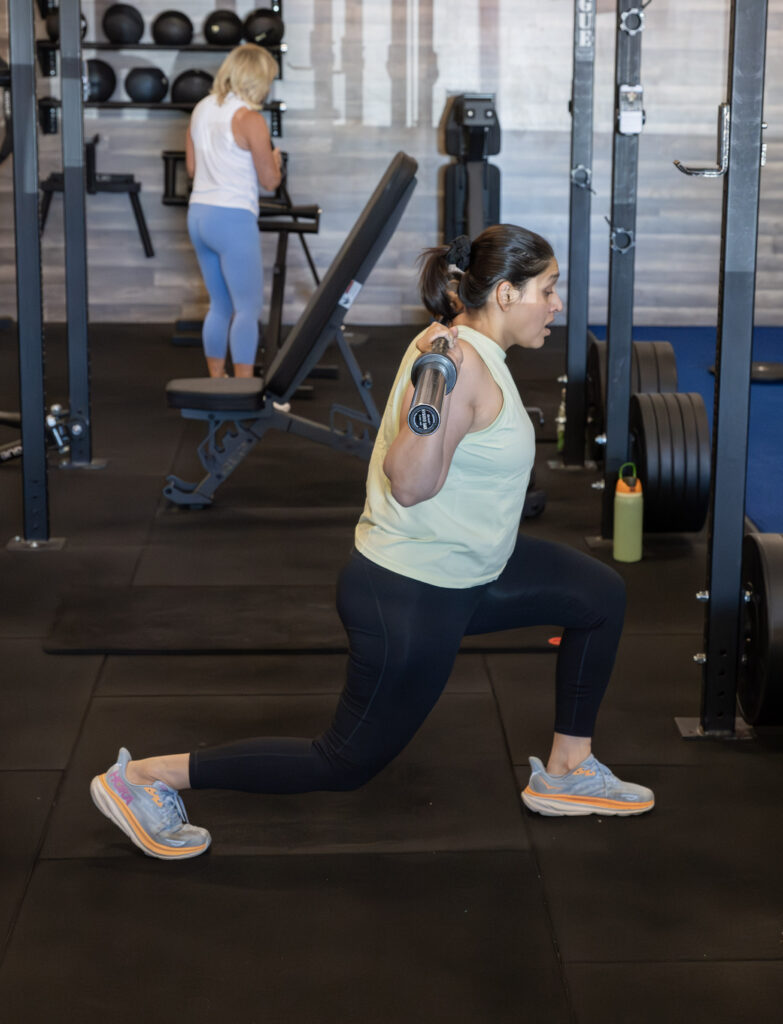
Building muscle after 40 is one of the most valuable things you can do for your health, even if it looks nothing like what you expect. When most people hear “building muscle,” they picture bodybuilders.
Big arms. Strict diets. Hours in the gym. A lifestyle that feels completely disconnected from the reality of being a busy adult in your 40s, 50s, or 60s with a job, a family, and a body that has some history on it.
So they opt out of the conversation entirely. Building muscle sounds like something other people do. Something extreme. Something that isn’t really relevant to what they’re after.
That opt-out is one of the most expensive decisions an aging adult can make for their long-term health.
Because building muscle — in the context of adults over 40 — has almost nothing to do with aesthetics or bodybuilding. It is one of the most powerful levers available for metabolic health, bone density, joint resilience, cognitive function, and long-term independence. The research on this is not subtle. And at Block Fitness, we’ve watched it play out in real people across Tucson for years.
What Hypertrophy Actually Is for Building Muscle After 40
Hypertrophy is the technical term for muscle growth. It happens when the mechanical stress of resistance training, combined with adequate protein and recovery, causes muscle fibers to repair and grow slightly larger and stronger than they were before.
It does not require extreme training. It does not require a bodybuilder’s diet. It does not require hours per day in the gym.
It requires a consistent progressive stimulus, adequate protein, and enough recovery between sessions for adaptation to occur. Three sessions per week of well-designed strength training is enough to drive meaningful hypertrophy in most adults — including adults in their 50s, 60s, and 70s.
The research is unambiguous on this point. A landmark 2019 review in the Journal of Strength and Conditioning Research confirmed that older adults retain a robust capacity to build muscle in response to resistance training — the process is slower than in younger adults, and the protein requirements are higher, but the adaptation is real and significant.
Your body can still do this. It wants to do this. It just needs the right input.

The Case for Muscle That Has Nothing to Do With How You Look
Metabolic Health
Muscle is the largest insulin-sensitive tissue in the body. It is the primary site where glucose is cleared from the bloodstream after a meal. More muscle means better blood sugar regulation, improved insulin sensitivity, and reduced risk of type 2 diabetes — independent of body weight.
For adults over 40 whose metabolic function is changing, this is not a minor benefit. It is a foundational health outcome that affects energy, body composition, inflammation, and long-term disease risk.
Bone Density
Resistance training places mechanical load on bone as well as muscle. That load stimulates bone remodeling — the process by which bone tissue is maintained and strengthened. The National Osteoporosis Foundation identifies weight-bearing and resistance exercise as the most effective non-pharmacological intervention for preserving bone density in older adults.
Building muscle and building bone happen together. They respond to the same stimulus.
Joint Resilience
Strong muscles protect joints. The muscles surrounding the knee, hip, and shoulder absorb force, stabilize movement, and reduce the load placed on cartilage and connective tissue during daily activity. Adults with stronger legs have better knee health. Adults with stronger rotator cuffs have better shoulder health.
The joint pain that many adults over 40 attribute to aging is often, in significant part, a strength deficit. We see this regularly at Block Fitness. Members who come in with chronic knee or hip discomfort frequently find that as their strength improves, their pain decreases — not because we treated the pain directly, but because the stronger tissue around the joint changed the mechanical environment it’s operating in.
Cognitive Function
This one surprises people. A growing body of research links resistance training and muscle mass to cognitive health in older adults. A 2020 review in Neuroscience and Biobehavioral Reviews found that resistance training produces measurable improvements in executive function, memory, and processing speed in adults over 50 — with effects that appear independent of cardiovascular fitness.
The mechanisms are still being studied, but the signal is consistent. Building muscle is good for your brain.
Longevity
Grip strength — one of the simplest proxies for overall muscle mass and strength — is one of the strongest predictors of all-cause mortality in older adults. A 2015 study in The Lancet following over 140,000 adults across 17 countries found that grip strength was a more powerful predictor of cardiovascular death than systolic blood pressure.
Muscle mass is not vanity. It is survival tissue.
What This Looks Like at Block Fitness
The members at Block Fitness who are building muscle after 40 do not look like bodybuilders. They look like people who move well, feel capable, have energy, and are doing things physically in their 60s that many people struggle with in their 40s.
They train three times per week. They lift progressively heavier loads over time. They eat enough protein. They recover between sessions. The process is not dramatic. It does not require suffering. It requires consistency and a program that is actually designed to produce adaptation.
That is what we build for every member who walks through our doors — at our Oro Valley location and at Catalina Foothills. Not a generic workout. A progressive plan designed around where you are right now and where you’re capable of going. Building muscle after 40 also depends on getting enough protein, which is why we walk every member through their protein targets.
Come Learn More in Person
On August 15th, Coach James is leading a Muscle-Building Seminar at our Oro Valley location — built specifically for adults who want to understand how hypertrophy works, what drives it, and how to structure their training and nutrition to make it happen consistently.
This is not a seminar for competitive athletes. It is for adults over 40 who want to build the physical foundation that keeps them strong, capable, and independent for the long haul.
Space is limited. Reach out to our Oro Valley team to reserve your spot: orovalley@blockfitco.com or 520.317.7409.
Move Better. Feel Better. Live Stronger.
Quick Take: FAQ
Q: Is it too late to build muscle in my 50s or 60s?
A: No. The research is clear that adults well into their 70s and 80s retain the capacity to build meaningful muscle in response to resistance training. Starting later means the timeline is longer and the protein requirements are higher — but the adaptation is real.
Q: How long before I notice a difference?
A: Strength improvements typically appear within four to six weeks as the nervous system adapts. Visible muscle changes take longer — most adults notice meaningful differences at the three to six month mark with consistent training and adequate protein.
Q: Do I need to lift heavy weights?
A: Not necessarily. Research shows that moderate loads taken close to muscular fatigue produce similar hypertrophy to heavy loads. What matters is effort relative to your current capacity, not the absolute weight on the bar.
References
- Morton RW, et al. “Neither load nor systemic hormones determine resistance training-mediated hypertrophy or strength gains in resistance-trained young men.” Journal of Applied Physiology. 2016.
- Liu CJ, Latham NK. “Progressive resistance strength training for improving physical function in older adults.” Cochrane Database of Systematic Reviews. 2009.
- Northey JM, et al. “Exercise interventions for cognitive function in adults older than 50.” Neuroscience and Biobehavioral Reviews. 2018.
- Leong DP, et al. “Prognostic value of grip strength.” The Lancet. 2015.
- National Osteoporosis Foundation. “Exercise for Strong Bones.” nof.org