
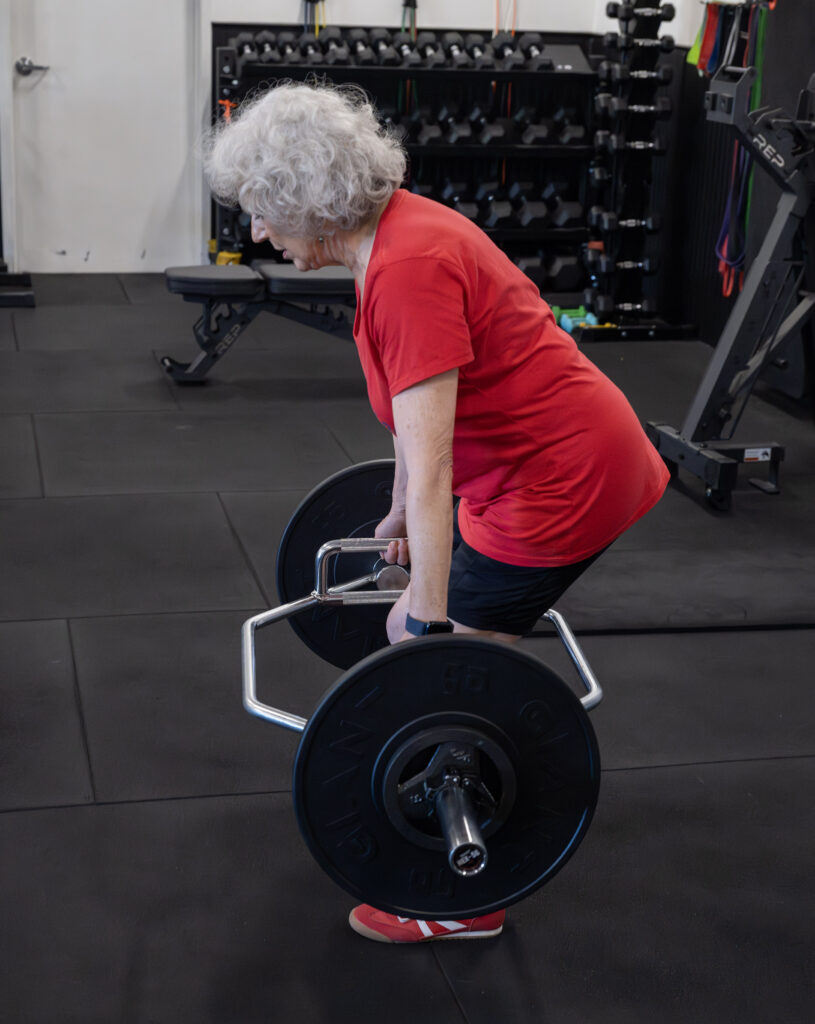
There is one principle behind every meaningful strength result ever produced.
One principle that separates programs that work from programs that keep people busy. One principle that explains why some people make consistent progress for years while others plateau after a few months of genuine effort.
It is called progressive overload. And once you understand it, the way you think about training changes completely.
What Progressive Overload Actually Means
Progressive overload means the demand you place on your body increases over time.
That’s it. The definition is simple. The application is where most people go wrong.
Your body adapts to stress. When you place a demand on your muscles, your nervous system, your bones, and your connective tissue, your body responds by becoming more capable of handling that demand. That adaptation is the result you’re after — more strength, more muscle, better function.
…
The problem is that once your body adapts to a given level of demand, it stops changing. A workout that challenged you six months ago is maintenance today. Your body has already figured out how to handle it. To keep producing adaptation, the demand has to keep increasing.
This is why showing up consistently is necessary but not sufficient. Consistency without progression keeps you where you are. Consistency with progression moves you forward.
The Ways Progression Actually Works
Most people think progressive overload means adding weight to the bar every session. That’s one form of it. It’s also the one that breaks down fastest, especially for adults over 40 whose recovery capacity doesn’t allow for weekly load increases indefinitely.
Progression can happen in multiple ways:
More weight. The most obvious form. When you can complete your target reps with good form, increasing the load is the most direct progression available.
More reps at the same weight. If you’re doing three sets of eight at a given load and you get to three sets of ten, you’ve produced a progressive overload before you ever add weight.
More sets. Increasing training volume over time — adding a set to a key exercise — is a legitimate and often underused form of progression.
Better range of motion. A goblet squat taken through a deeper, more controlled range of motion with the same load is a harder stimulus than a partial rep. Improving movement quality and range is progression.
Shorter rest periods. The same work completed in less time represents a higher density of training stress. This is a valid progression, particularly for metabolic adaptations.
More complex movement patterns. Progressing from a goblet squat to a barbell squat, or from a dumbbell row to a single-arm cable row, increases the demand on coordination and stability alongside strength.
At Block Fitness, our coaches use all of these. A good program doesn’t just add weight. It finds the right form of progression for each person at each stage of their training — because the right next step depends on where you are right now.
What Gets in the Way
Going Too Heavy Too Fast
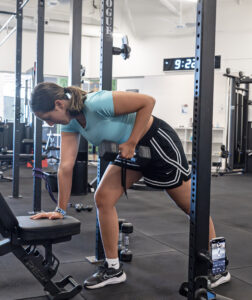
The most common mistake adults make when they understand progressive overload is trying to apply it too aggressively. Adding too much weight too soon, pushing through form breakdown to get the number up, chasing progression at the expense of quality.
This produces injury, not adaptation. And injury sets the timeline back further than a conservative progression ever would.
The rule we apply at Block Fitness: add load when you can complete your target reps with excellent form, not before. Form is not a checkbox. It is the evidence that your body is ready for more.
Staying at the Same Weight Forever
The opposite problem, and arguably more common in adults over 40 who have been conditioned to train conservatively.
Staying at a weight that feels comfortable indefinitely produces no meaningful stimulus for adaptation. Your body is not being asked to do anything it hasn’t already figured out. The training feels fine. The results don’t come.
Appropriate challenge is not dangerous. It is the point. We have watched Block Fitness members in their 60s and 70s lift weights they never imagined possible — not because we pushed them recklessly, but because we progressed them intelligently over time. The body responds when it is asked to.
Inconsistent Attendance Breaking the Progression Chain
Progressive overload requires continuity. Missing two weeks resets the accumulated stimulus of the previous month. Coming back and trying to pick up at the same load after an extended break increases injury risk and produces soreness without productive adaptation.
Consistency and progression are inseparable. One without the other stalls. Together, they compound.
What This Looks Like Over Time
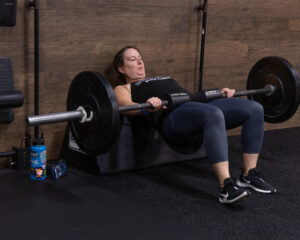
Here’s the reality of what intelligent progressive overload produces for an adult over 40 who trains consistently at Block Fitness.
In the first four to eight weeks, the gains are largely neurological. Your nervous system is learning to recruit muscle more efficiently. You feel stronger before you look stronger. The weight on the bar moves up relatively quickly in this phase.
From weeks eight through sixteen, muscle tissue begins to change meaningfully. Strength continues to climb. Body composition starts to shift. This is where most people who stay consistent begin to notice visible differences.
Beyond six months of sustained, progressive training, the changes become significant. Members who have trained with us for a year or more move differently, look different, and perform at levels they would not have predicted when they walked in for their first session.
None of that happens without a program that is designed to progress. And none of it happens without a coach who knows when to push and when to pull back.
The Seminar That Goes Deeper
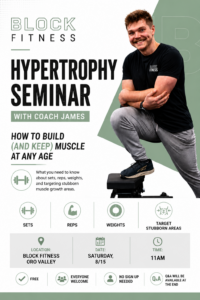
On August 15th, Coach James is leading the Muscle-Building Seminar at our Oro Valley location — and progressive overload is at the center of it. If you want to understand how to apply this principle to your own training in a way that produces real results, this is worth attending.
Reach out to reserve your spot: orovalley@blockfitco.com or 520.317.7409.
Move Better. Feel Better. Live Stronger.
Quick Take: FAQ
Q: How often should I increase the weight I’m lifting?
A: When you can complete your target reps across all sets with good form, that’s the signal. For most adults over 40, meaningful load increases happen every one to three weeks on a given exercise — sometimes faster early in training, more slowly as you become more advanced.
Q: What if I’ve been stuck at the same weight for months?
A: That’s a programming problem, not a you problem. Either the progression scheme needs to change, the exercise selection needs to rotate, or there’s a recovery variable — sleep, protein, stress — that’s limiting adaptation. A coach can identify which one quickly.
Q: Is progressive overload safe for people with joint issues?
A: Yes, when applied intelligently. The key is finding the right form of progression for the individual. Someone with knee issues might progress range of motion before load. Someone with a shoulder history might progress reps before weight. The principle is universal. The application is individual.