
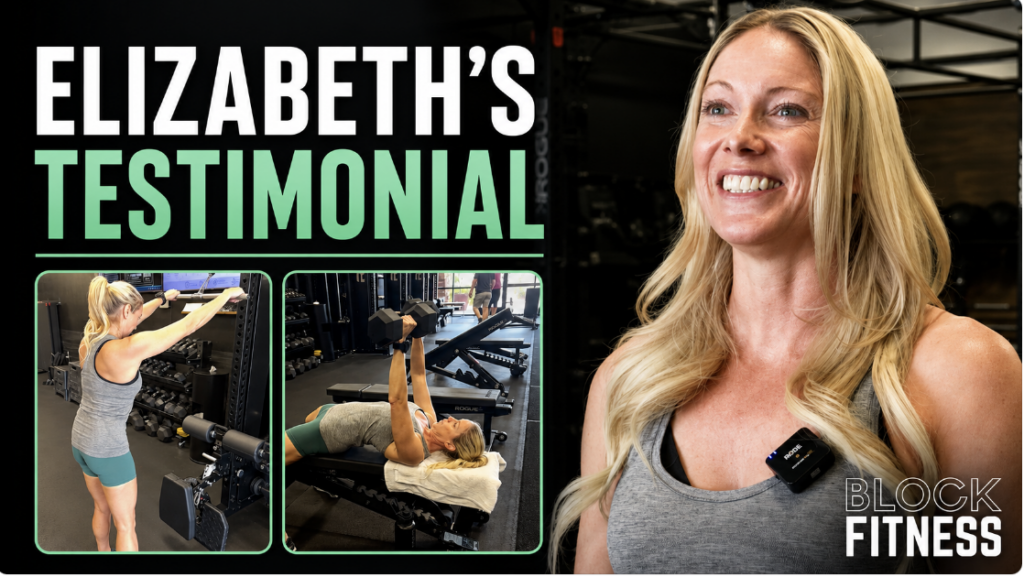
Real strength training for triathletes has to do more than build muscle. It has to undo years of compensation first.
Elizabeth tore her ACL at the Juilliard Summer Dance Program.
Then it was misdiagnosed. And she just kept going — competing, performing, moving — for eight years without knowing what was actually wrong.
By the time she understood the full picture, the damage had compounded. Years of compensating for an injury she didn’t know she had had created muscle atrophy, imbalances, and a chain reaction of inefficiencies that her body was still working around.
“When you’re constantly compensating for injuries, old injuries — it just creates this chain reaction.”
She needed somewhere that could help her undo some of that. Rebuild the balance and strength that years of compensation had taken away.
She found it at Block Fitness Catalina Foothills. Two years ago. And she hasn’t looked back.
From Dance to Triathlon
Elizabeth grew up in dance. Performing arts high school. Juilliard. The kind of background that builds body awareness and physical discipline at a level most people never develop.
It also built a relationship with injury that most people never have to navigate.
After the ACL — after the misdiagnosis, after eight years of running on something that wasn’t there — she found a new athletic identity: triathlons. Swimming. Biking. Running. A sport that demands a body that is not just strong but organized, balanced, and resilient across multiple movement patterns.
Strength training became the foundation that made all of it possible.
“Strength training is huge for being able to continue with the triathlon stuff. If I didn’t do this here, I couldn’t do that.”
She knows what happens when the foundation slips. She has experienced it.
“There have been times where I’ve not had a good strength training plan — and the wheels fall off and I end up in physical therapy.”
Block Fitness keeps the wheels on.
The Brain-Body Connection
Elizabeth talks about what she is building at Block Fitness in a way that goes deeper than most members articulate.
“I want to really build that brain-body connection. I want to be able to go and bike and swim and not think about that.”
That is a sophisticated goal. Not just strength. Not just mobility. The kind of automaticity that comes from training a body so thoroughly that it handles the demands of sport without conscious management — where the movement is just there, reliable and efficient, because the foundation underneath it is solid.
For someone with her history — a misdiagnosed ACL, years of compensation, muscle atrophy on one side — that brain-body connection required rebuilding from the ground up.
Two years in, she is building it.
The Setup That Works
Elizabeth is specific about why the semi-private model at Block Fitness works for her.
“I love the setup of the semi-private sessions. I come in, I have my app, I know what I’m doing. I don’t have to think about what I’m doing. Somebody else who knows better than me is putting it together.”
That last line is the key. She is an athlete with a sophisticated understanding of her own body. She knows movement. She knows training. And she still wants someone else building the program — because having that cognitive load removed means she can show up and just work.
No fighting over equipment. No figuring out what comes next. No second-guessing the plan.
“Everybody’s here doing their own thing, but doing it together.”
She called it life-changing. Not as hyperbole. As an accurate description of what two years of the right training environment has done for her ability to do the sport she loves, for as long as she wants to do it.
Sitting in the Parking Lot
Here is the part of Elizabeth’s story that will resonate with almost anyone who has ever had to talk themselves into a training session.
“There are a lot of days that I’m sitting in my car in the parking lot like, ‘Oh gosh, I really don’t have it today.’ The minute I get in here and start working — it’s there.”
And then she said something that might be the most useful thing anyone has said across all of our member stories.
“We overestimate the importance of the motivation before doing the thing. The motivation comes after doing the thing.”
Read that again.
Motivation is not the prerequisite. It is the result. The feeling that makes you want to come back arrives after you start — not before. Waiting until you feel ready is waiting for something that only shows up once you stop waiting.
Elizabeth knows this. She sits in the parking lot, talks herself in, and walks out with everything she needed.
Every time.
“Go. Go. Go do it.”
If Elizabeth’s story resonates — if you want to build the foundation that keeps you doing the things you love for as long as you want to do them — we’d love to help.
Schedule your first session at Block Fitness and come find out what two years can build.
Move Better. Feel Better. Live Stronger.
Why Strength Training for Triathletes Works
Strength training for triathletes is not optional. It is the layer that protects the swim, the bike, and the run from each other, so old compensations do not quietly turn into new injuries.
That is exactly what changed for Elizabeth. Explore our strength training programs to see how we build that same foundation for triathletes, runners, and anyone rebuilding after an old injury.
Quick Take: FAQ
Q: Can Block Fitness help with chronic compensation patterns from old injuries?
A: This is one of the most common things we work with. Years of compensating around an old injury creates imbalances that standard training often ignores. Our individualized assessment and programming process identifies those patterns and builds a plan that addresses them directly.
Q: Is Block Fitness appropriate for endurance athletes who also want strength training for triathletes?
A: Absolutely. Elizabeth is a triathlete. The strength foundation she builds at Block Fitness is what allows her to swim, bike, and run without the wheels falling off. We program around your other athletic demands rather than competing with them.
Q: What if I don’t feel motivated to come in?
A: Sit in the parking lot for a minute. Then come in anyway. Elizabeth’s advice is better than ours on this one.